
Press-side problem solving
Tablet Production Support
When a batch starts capping, sticking or varying in hardness on the press, the fastest route to the cause is a compaction profile of the material, not a longer press trial. Gamlen’s production support service measures the powder, finds what changed and recommends the fix.
Typical triggers: a new API or excipient lot, a supplier change, a press or tooling change, a formulation tweak, or a failure that only appears at scale.
- Find the cause of capping, lamination, sticking and hardness variation in days, not weeks
- Qualify a replacement supplier or lot before the next batch
- Evidence for change control and deviation reports
- Advice from scientists who have run presses, not just instruments

Describe the problem
What is failing, on which press, and what changed. A scientist replies within one working day.
We reply within one working day. No mailing list unless you ask.
Send. Compare. Fix.
Two lots of powder in, the cause and the fix out, usually within the week.
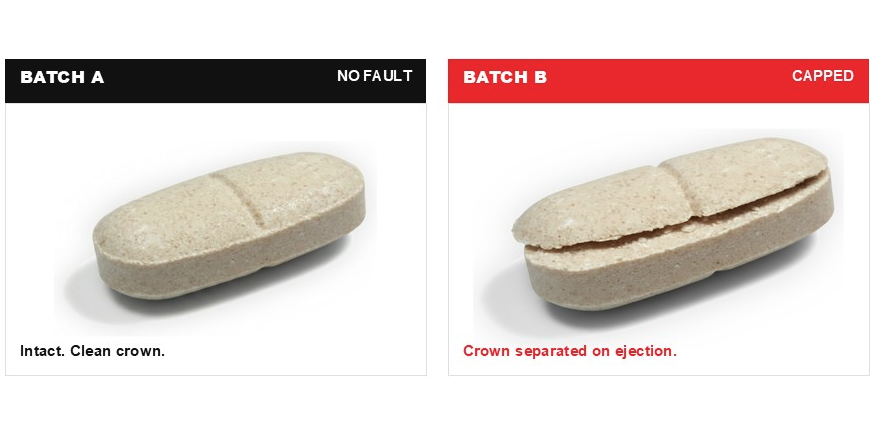
Send both lots
The good lot and the failing lot, under 10 g each. We confirm receipt and the test plan the same day; express turnaround if the line is down.
We profile them side by side
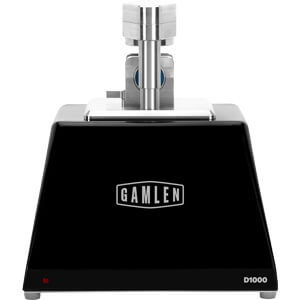
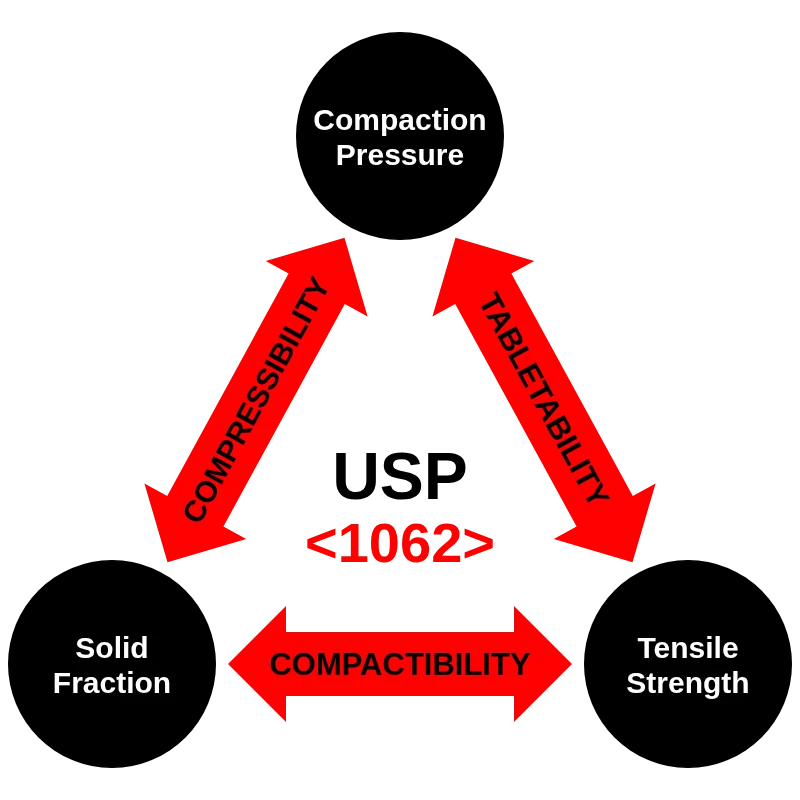
Compressibility, tabletability, compactibility, elastic recovery, ejection and detachment stress on the Gamlen D-Series, with every result benchmarked against industry norms.
The D-Series ›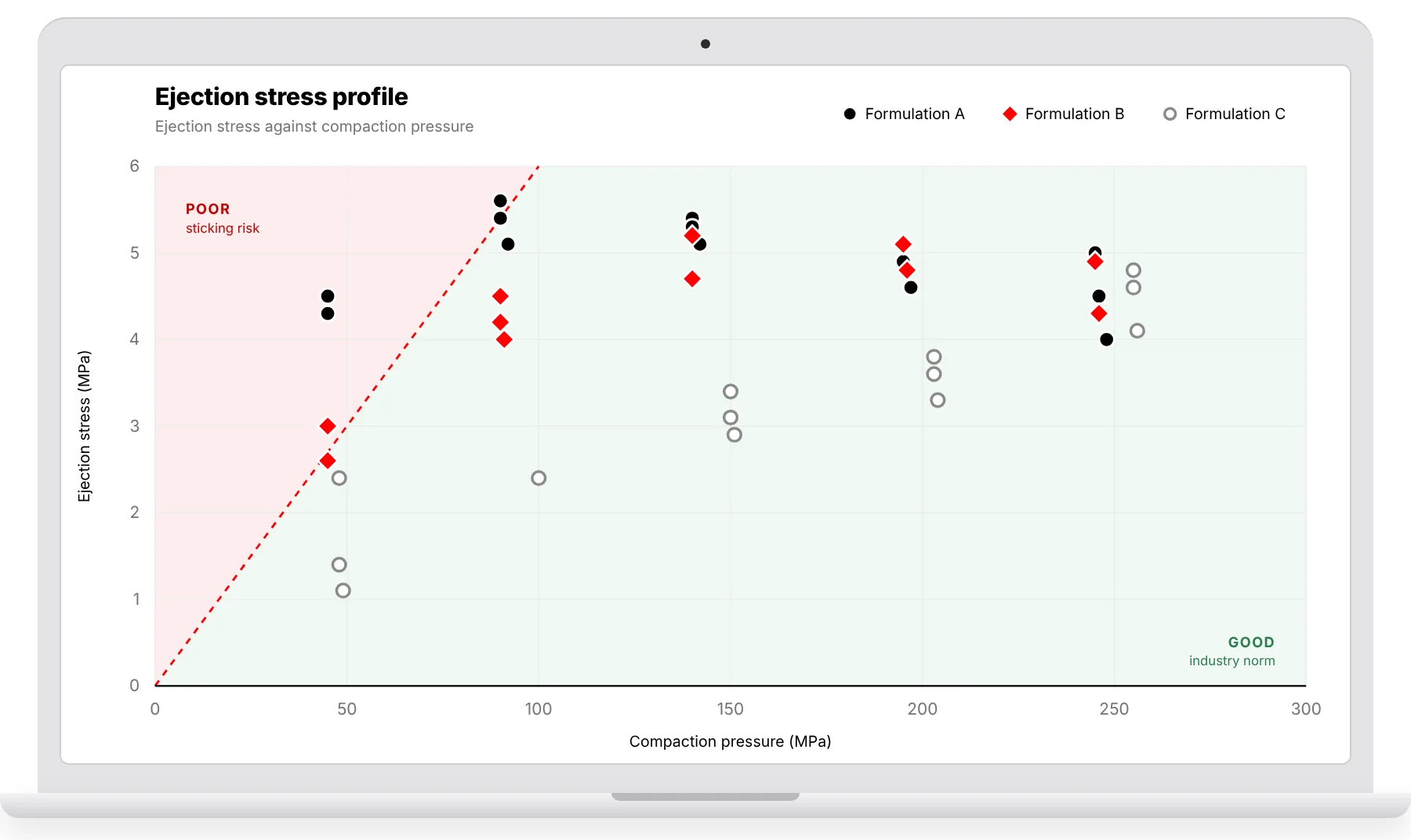
We find the difference
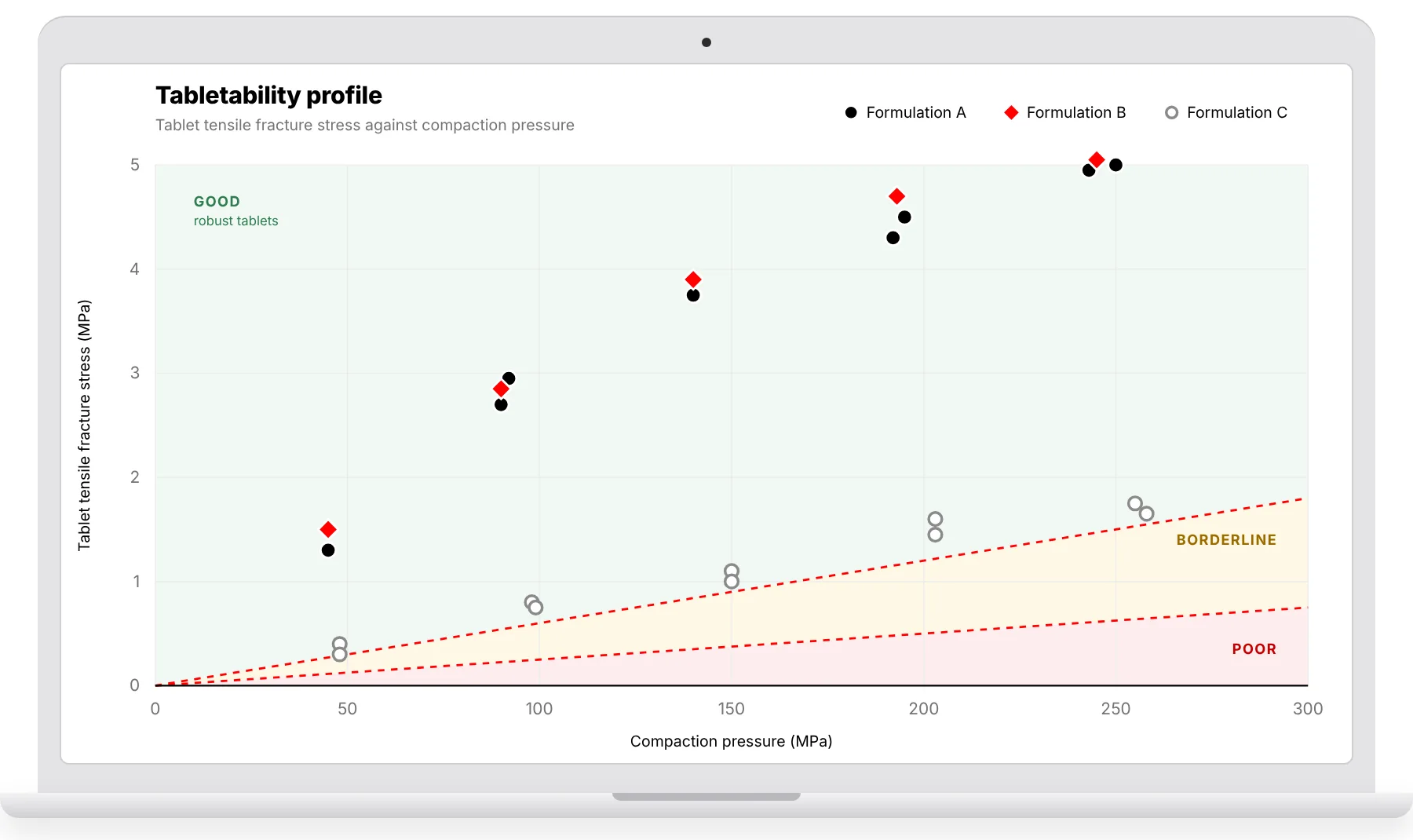
The profiles usually show the cause within hours: a lubrication shift, a lot that is more elastic, a tabletability ceiling the press is now exceeding.
Fix and document
A written report with the recommendation (lubricant level, pressure window, supplier specification) and the data your change control needs.
- Root cause named
- Pressure or lubrication window to run in
- Report ready for change control
What you get
Everything a QA or production lead needs to close the deviation and restart the line.
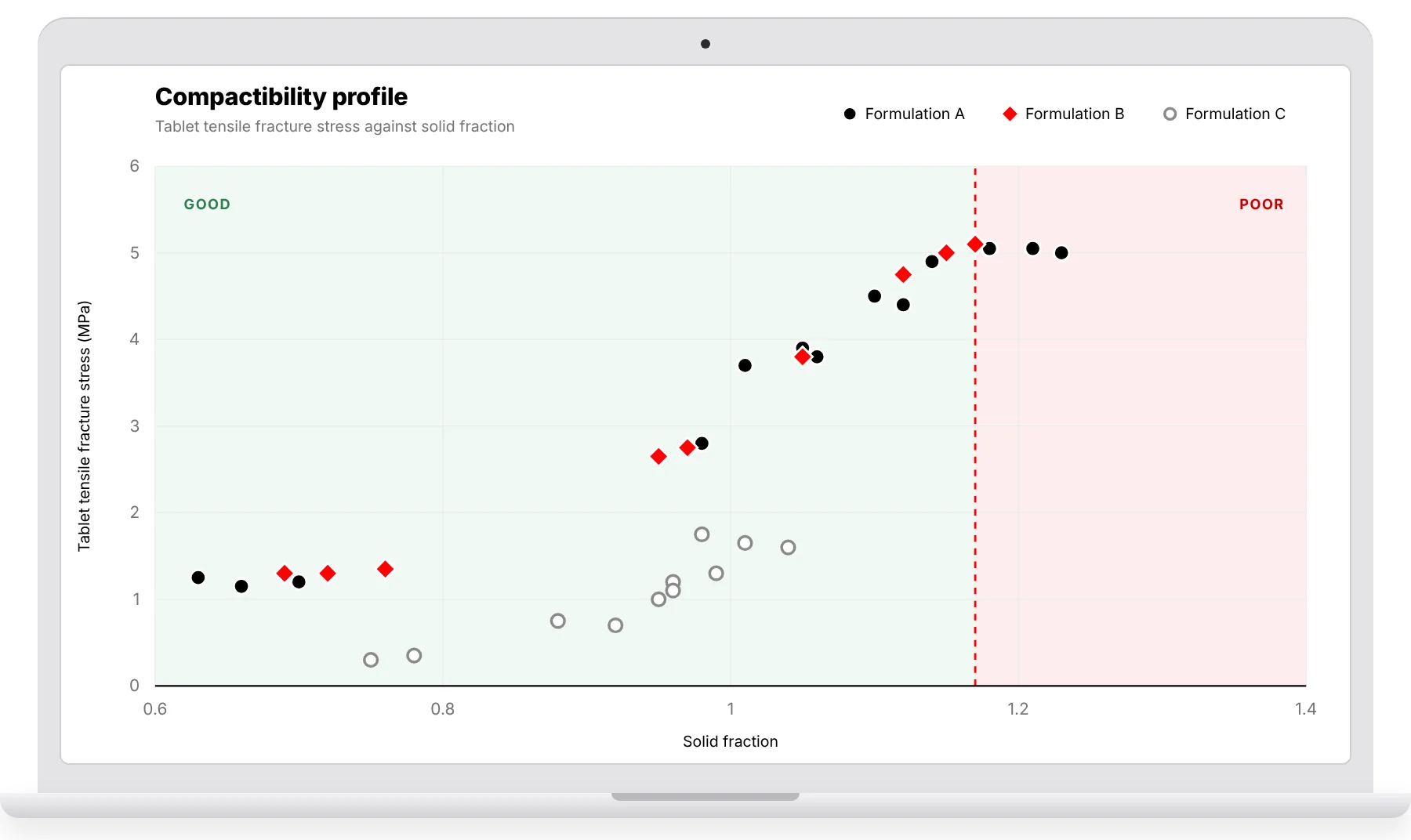
Side-by-side profiles
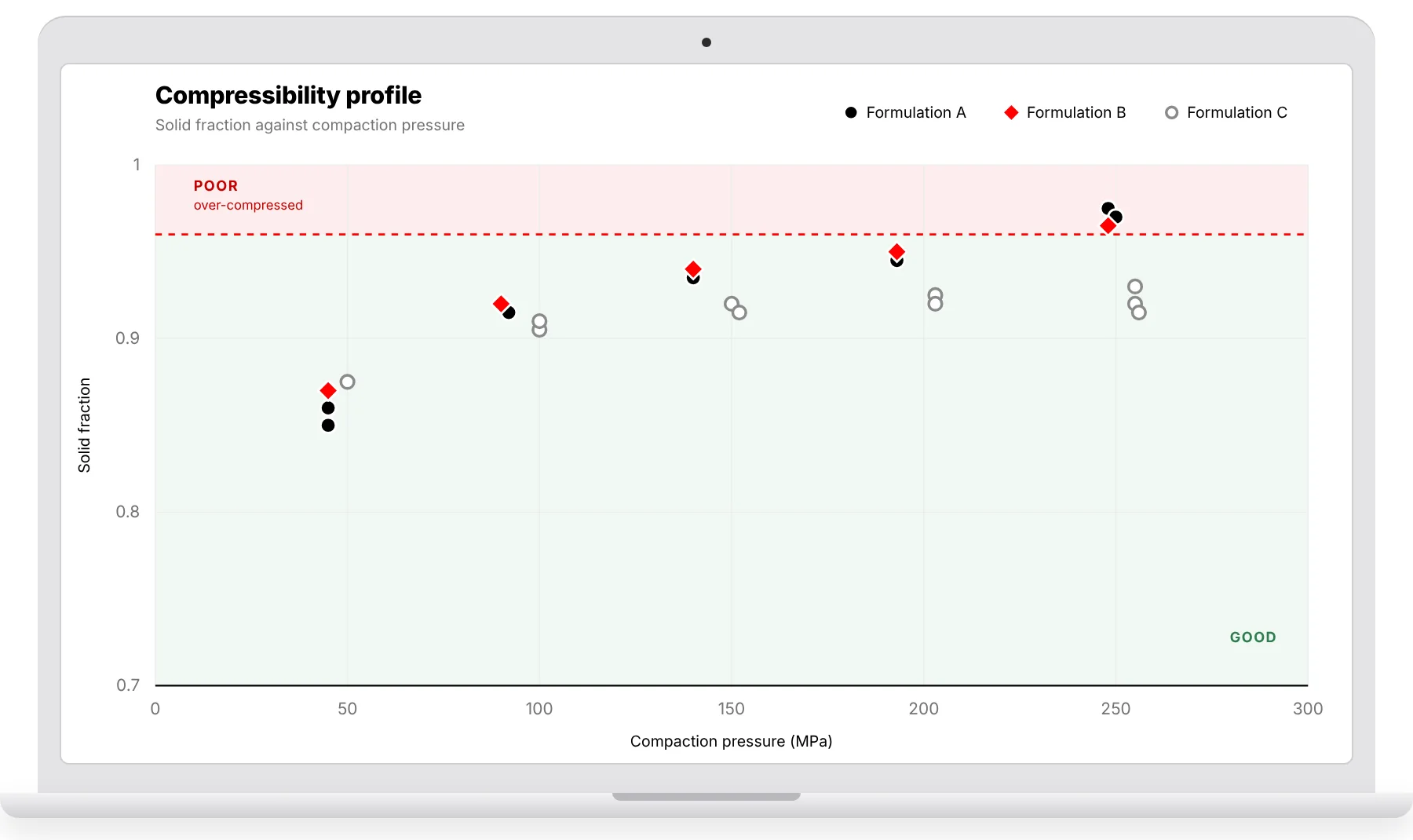
Good lot against failing lot on every USP <1062> graph, plus ejection and detachment stress, with the good, borderline and poor zones marked.
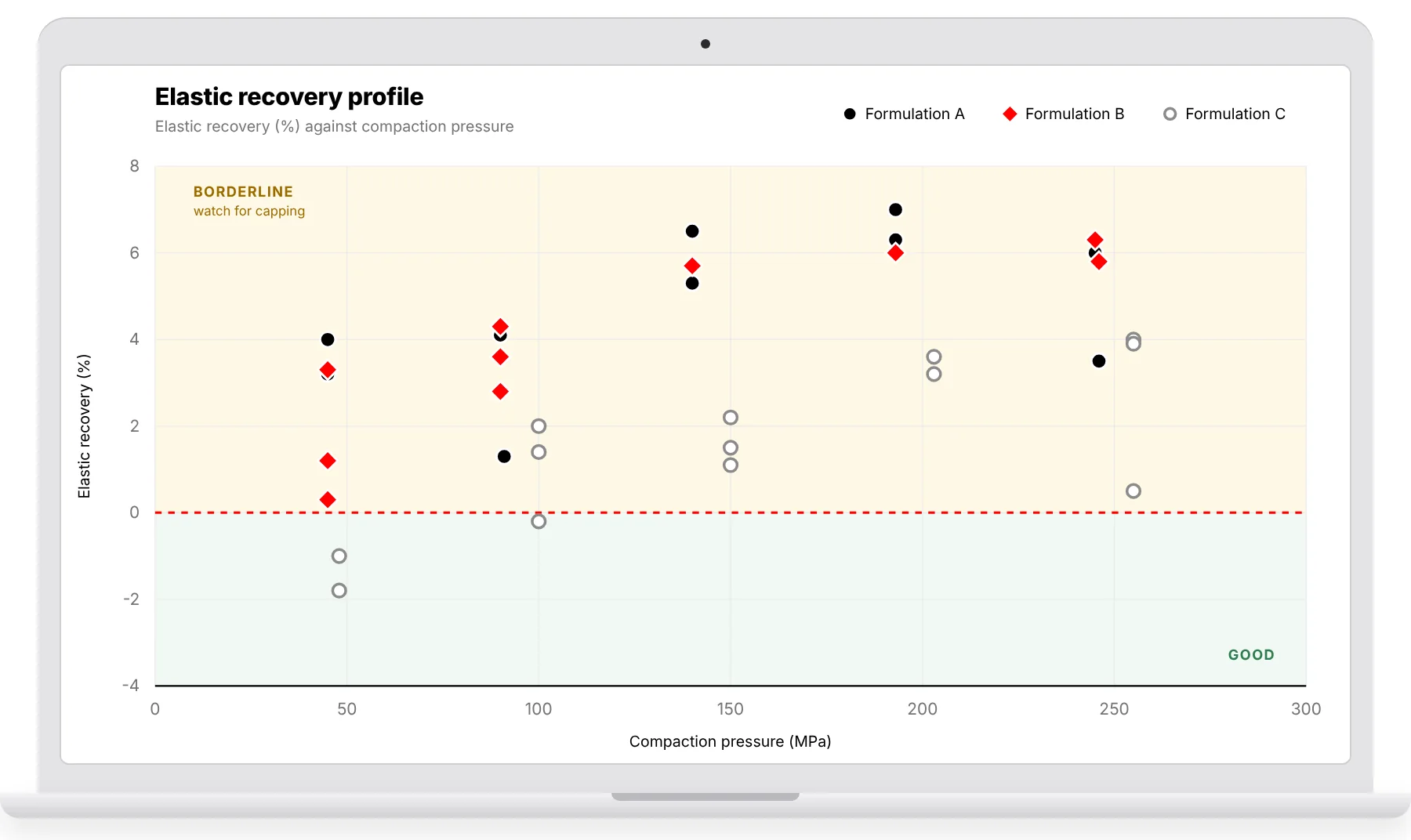
Root cause
A scientist’s interpretation of what changed: material, process or press, and why it shows up as capping, sticking or soft tablets.
A recommendation
What to change and the pressure or lubrication window to run in, with the evidence for the deviation report or supplier conversation.
Four problems a compaction profile solves on the press
Each of these usually traces back to the material, and the material can be measured in an afternoon.
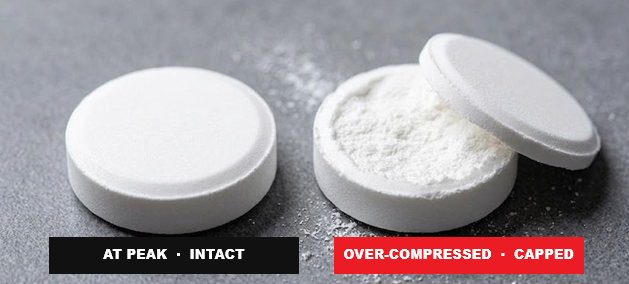
Problem 01
Capping and lamination at scale
Tablets that were fine in development split on the production press. The tabletability profile shows the pressure at which tensile strength peaks and starts to fall; the elastic recovery profile shows how much the tablet springs back after ejection. Together they give the pressure window the press should run in.
- Tabletability ceiling identified
- Elastic recovery compared against norms
- Pressure window recommended
Problem 02
Sticking and picking after a lot change
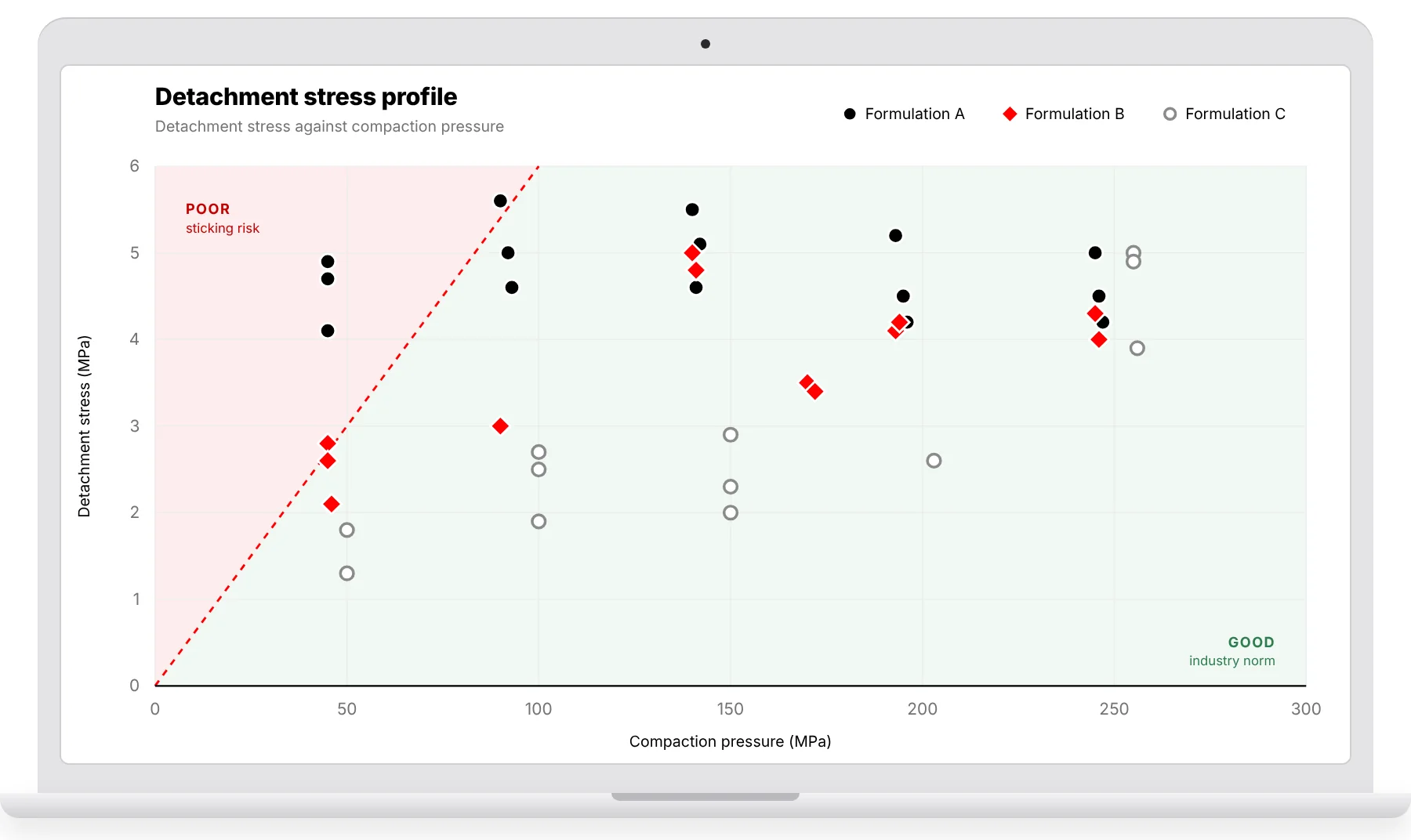
A new API or excipient lot and suddenly material is building up on the punch faces. Detachment and ejection stress show whether the new lot needs more lubricant, a different lubricant or a change of blend time, and whether the old lot was already close to the limit.
- Detachment stress, lot against lot
- Ejection stress against the lubrication norm
- Lubricant level or type recommended
Problem 03
Qualifying a replacement supplier
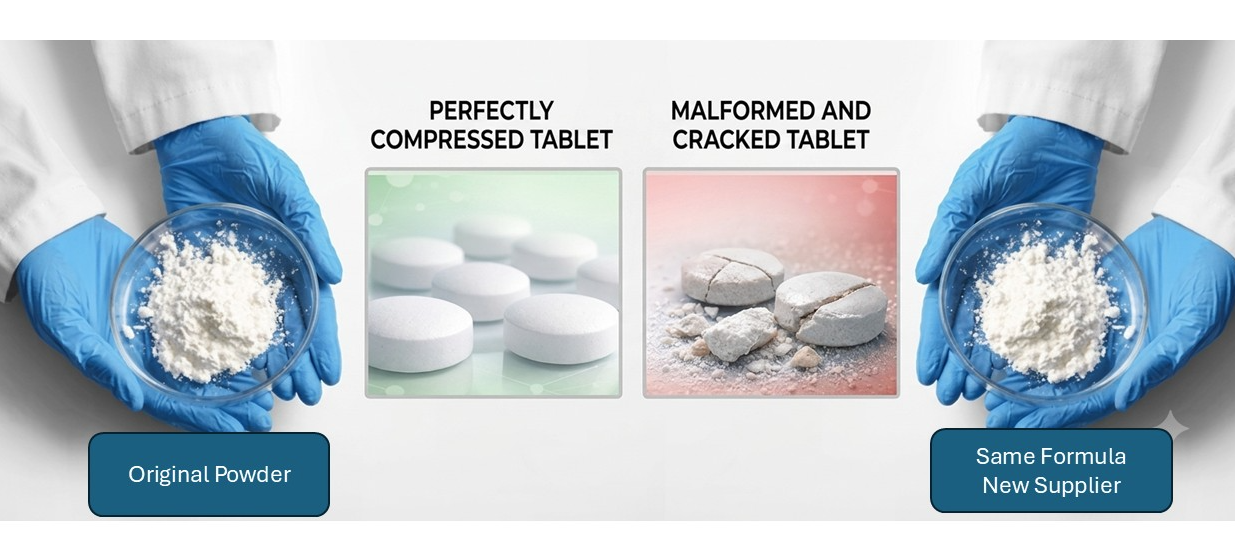
Same grade, same certificate of analysis, different behaviour on the press. A side-by-side profile of the incumbent and the candidate lot finds the difference in hours and gives you the evidence to accept the supplier, reject it, or tighten the specification.
- Both lots profiled on the same day
- Difference quantified, not described
- Specification advice for the supplier
Problem 04
Evidence for change control
A press, tooling or formulation change has to be shown not to have moved the product. Profiling before and after gives change control a quantified comparison on the standard USP <1062> attributes rather than a batch record and a judgement call.
- Before and after on one scale
- Written report for the change record
- Scientist available to talk to QA
Choose the level of support
Every engagement is quoted individually. Start with a two-lot comparison; most problems are solved there.
Batch investigation
Two lots, written report
The good lot and the failing lot, profiled side by side, with root cause and recommendation.
- ✓Full USP <1062> profiles for both lots
- ✓Ejection and detachment stress
- ✓Written root cause and recommendation
- ✓Scientist call with QA or production
- ✕Additional lots or suppliers
- ✕Press-side visit
Supplier or change qualification
Up to four lots
Incumbent against candidates, or before against after, with a specification recommendation.
- ✓Full USP <1062> profiles for both lots
- ✓Ejection and detachment stress
- ✓Written root cause and recommendation
- ✓Scientist call with QA or production
- ✓Additional lots or suppliers
- ✕Press-side visit
On-site support
Quoted
A Gamlen scientist at your press for the trial, with the instrument alongside if needed.
- ✓Full USP <1062> profiles for both lots
- ✓Ejection and detachment stress
- ✓Written root cause and recommendation
- ✓Scientist call with QA or production
- ✓Additional lots or suppliers
- ✓Press-side visit
“The Gamlen D series tablet press has become a standard part of Materials Science characterisation for commercial products. We have used it to evaluate API manufacturing process changes, investigate tablet manufacturing problems and to compare material suppliers.”
Rachael Webber, Materials Scientist, GSK
Related services

Press down? Send us the powder.
Two lots, under 10 g each, and a description of what is happening on the press. A Gamlen scientist will come back to you within one working day.