
Full compaction analysis and interpretation
Compaction Analysis
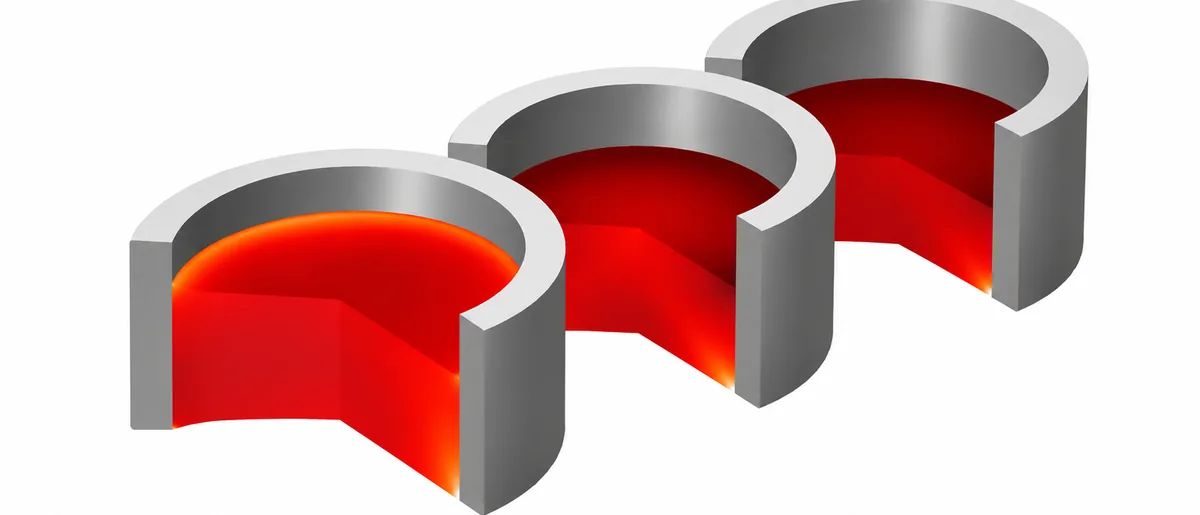
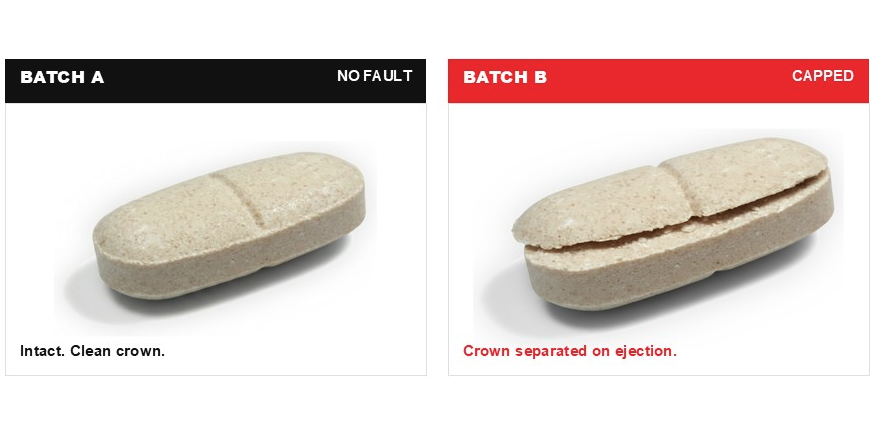
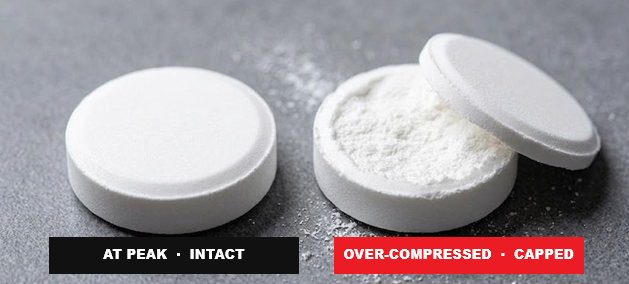
Determining whether a powder will form a good tablet is a complex process. For over a century pharmaceutical manufacturers have struggled with powder compression problems such as capping and lamination, powder sticking to punch surfaces or die wall, and insufficient tablet mechanical strength to withstand stress in downstream processing.
Now there is a new laboratory tablet testing service to help you predict and avoid common manufacturing problems. This gives you the peace of mind that your formulation works.
- Predict and avoid common manufacturing problems such as capping, lamination and sticking
- Peace of mind that your formulation works
- In-depth analysis and interpretation of the data, not just numbers
- Support for troubleshooting, change control and formulation development
Request a quote
Tell us what you want to compare and how many materials. A scientist replies within one working day.
We reply within one working day. No mailing list unless you ask.
Send. Measure. Interpret.
We not only generate data but also provide an in-depth analysis and interpretation of the data and how it relates to your project.
Send the powder
A few grams of each API, excipient or blend. We confirm receipt and the test plan the same day.
We compact and measure
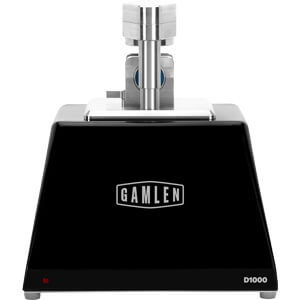
Tablets made across a range of compaction pressures on the Gamlen D-Series, which records the compaction, ejection and detachment forces for every tablet.
The D-Series ›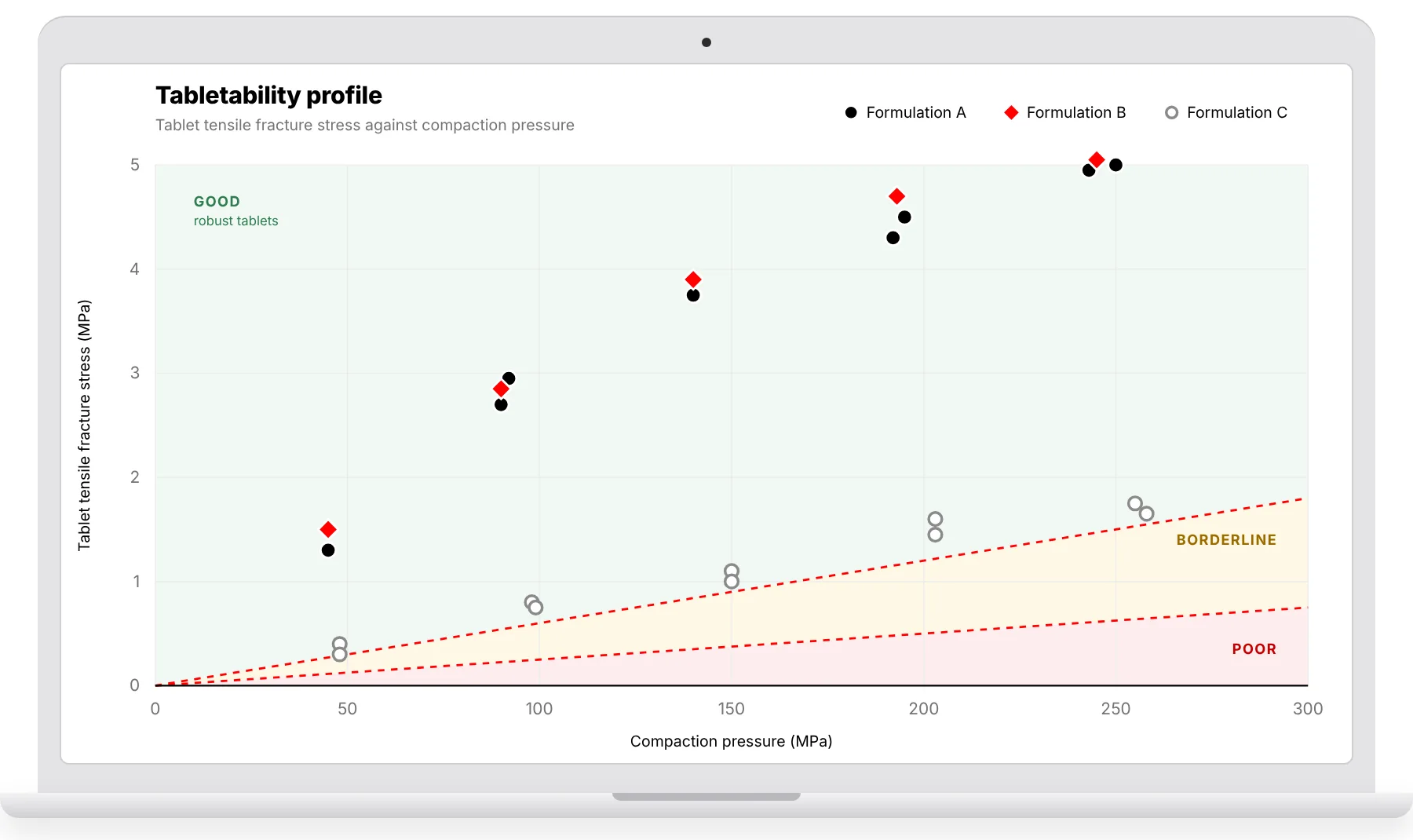
We profile and benchmark
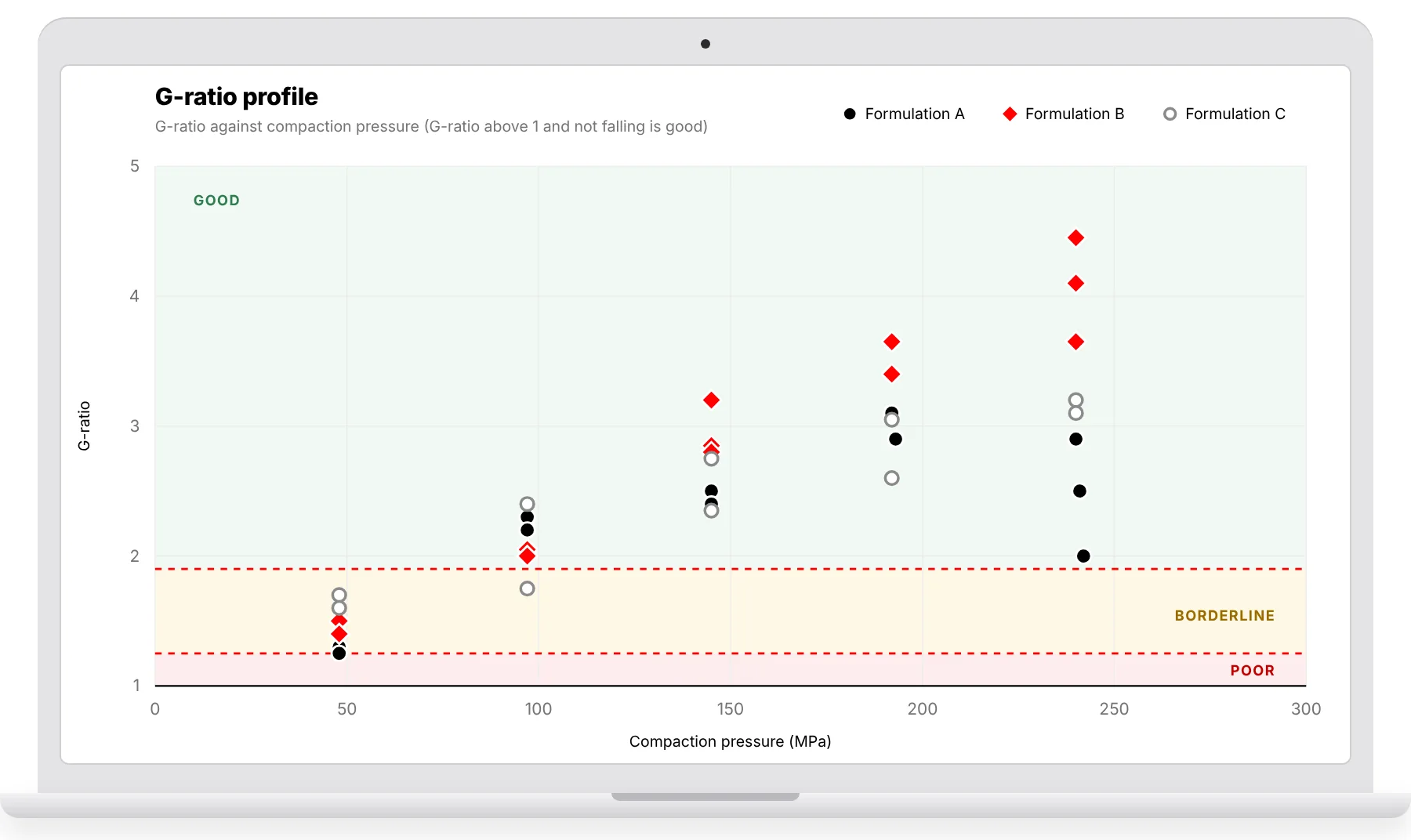
Around twelve graphs from the Gamlen Dashboard Nova, each benchmarked against colour-coded good, borderline and poor zones.
Interpretation
A written analysis of what the data means for your formulation, your press and your supplier, and a call with the scientist who ran it.
- Every graph explained
- Risks of capping, lamination and sticking flagged
- Recommendations for the next step
Typical full compaction analysis data
Every graph is benchmarked against colour-coded zones: good in green, borderline in yellow and poor in red.
Tabletability
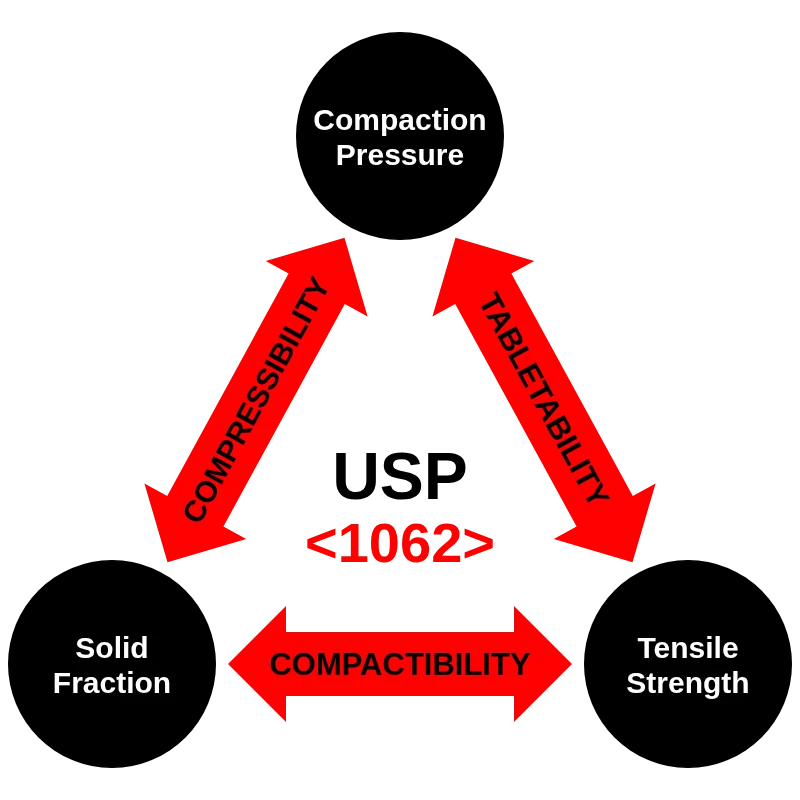
Tabletability is the dependence of tablet strength on compaction pressure. We maximise tabletability to produce a robust tablet which will withstand handling.
Compressibility
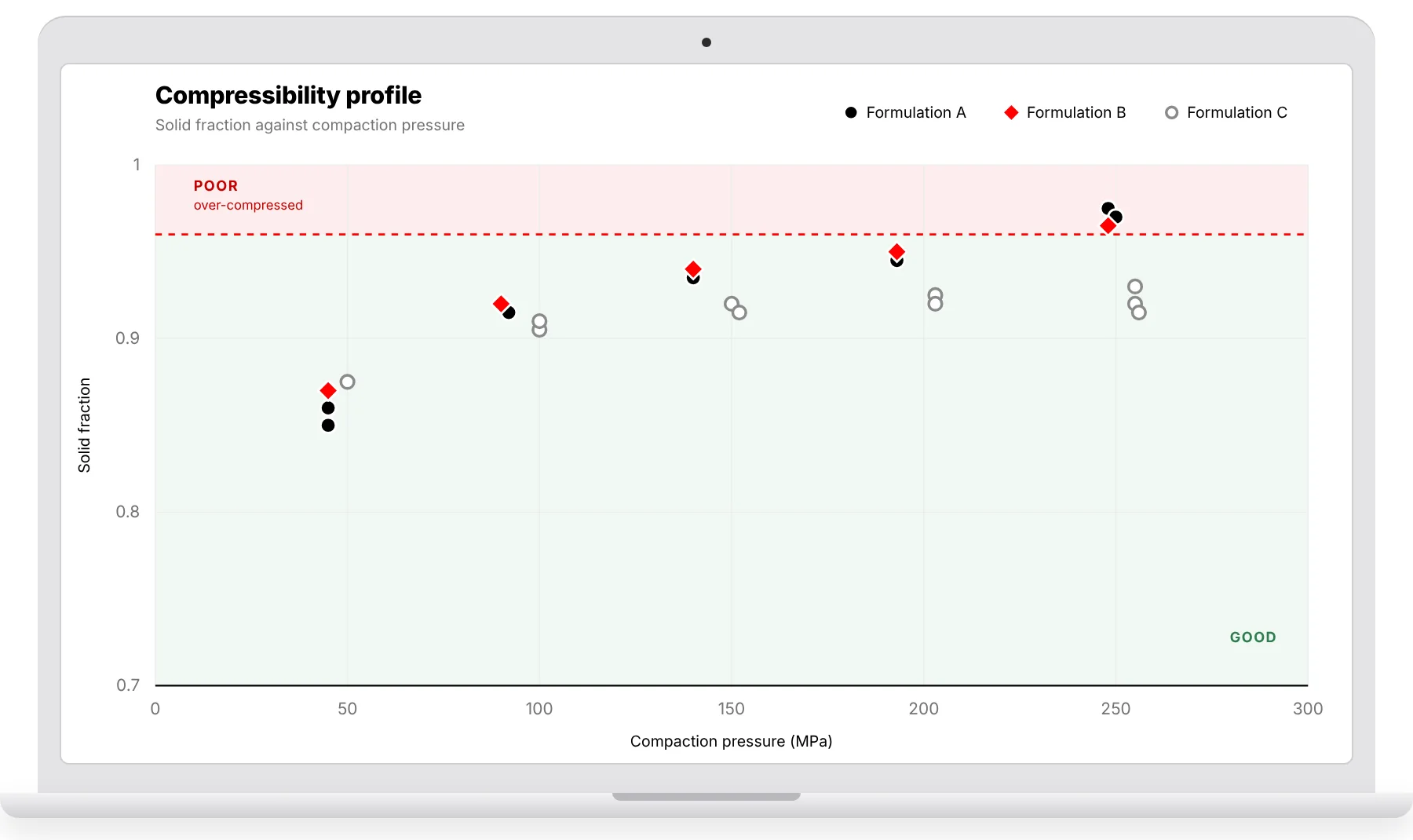
Compressibility describes how tablet solid fraction changes with compaction pressure. High solid fraction values hinder water penetration reducing dissolution rate.
Compactability
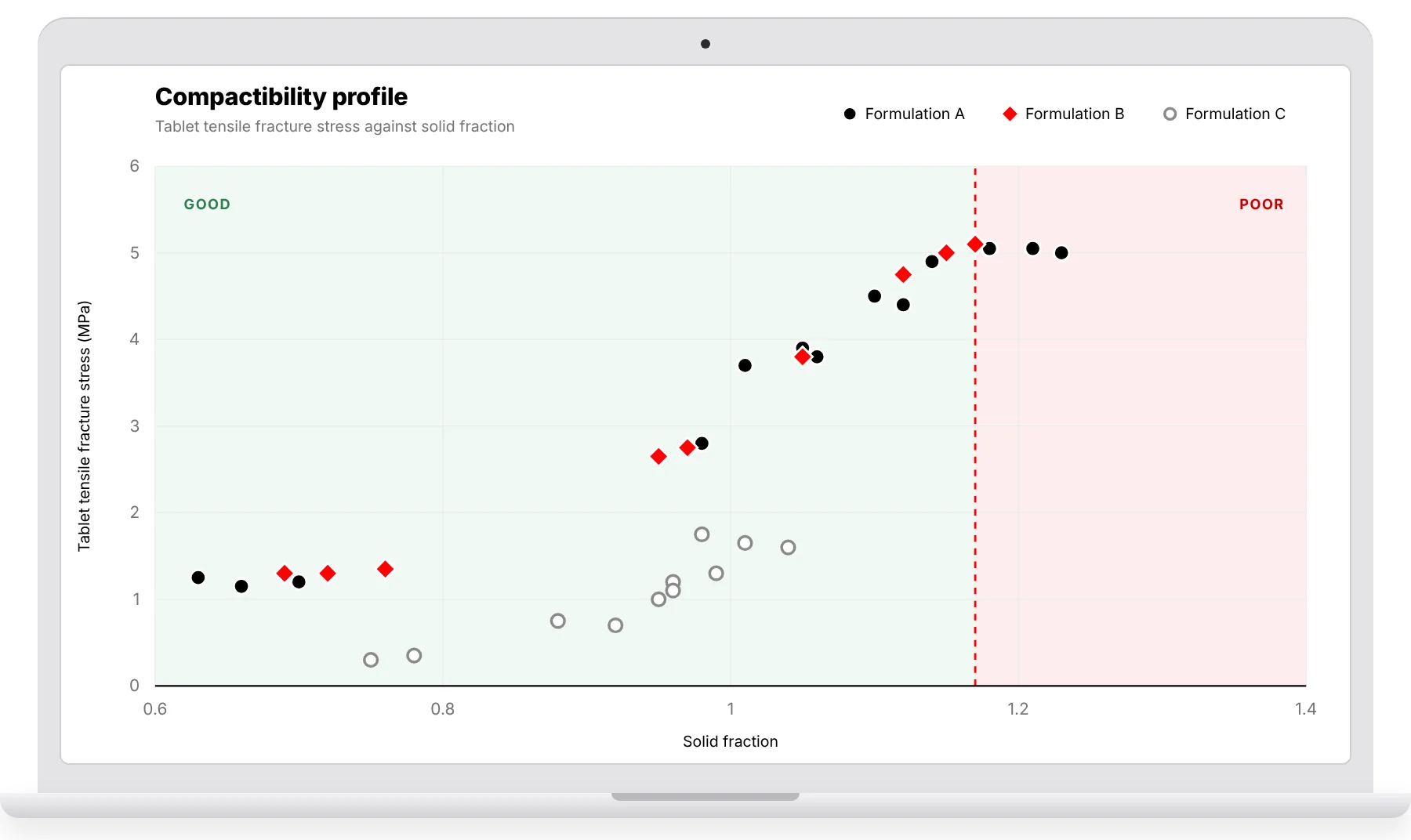
Compactability is the effect of solid fraction on tablet strength. We have to balance these properties to have strong tablets without over-compaction.
Elastic recovery
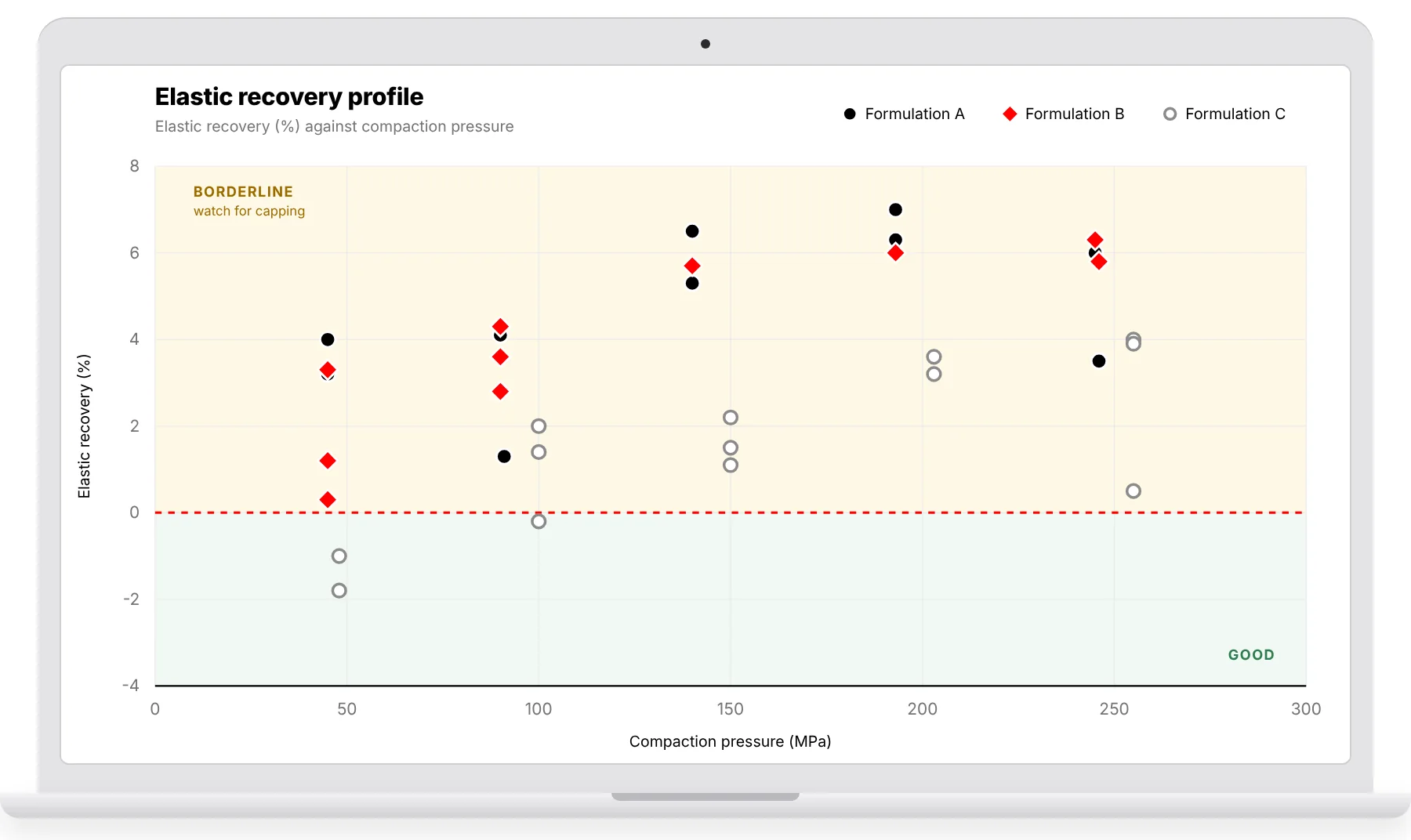
Excessive elastic recovery is a common cause of capping, which can be reduced through excipient selection.
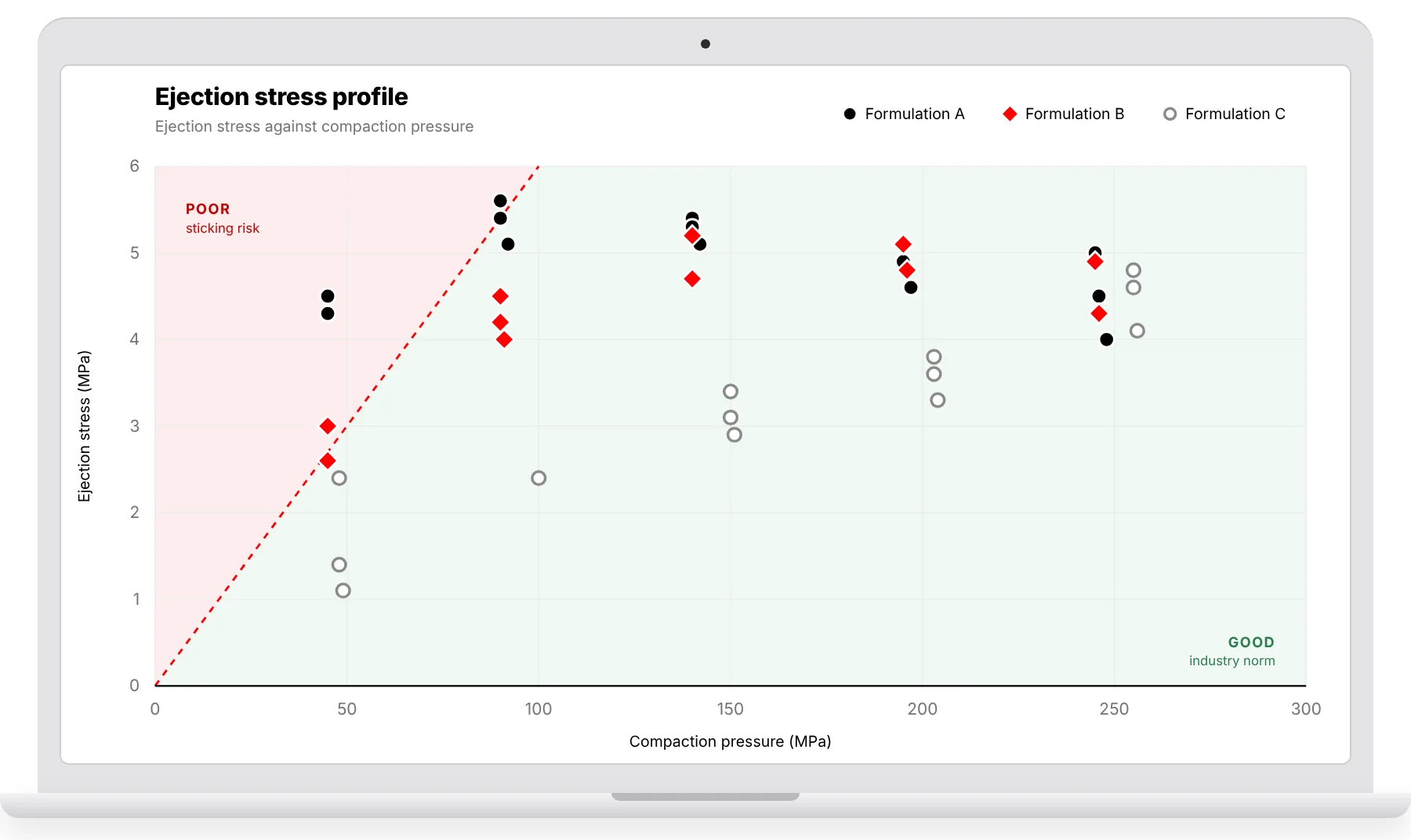
Ejection stress
Ejection stress indicates the quality of lubrication. Poor lubrication leads to picking, sticking and capping.
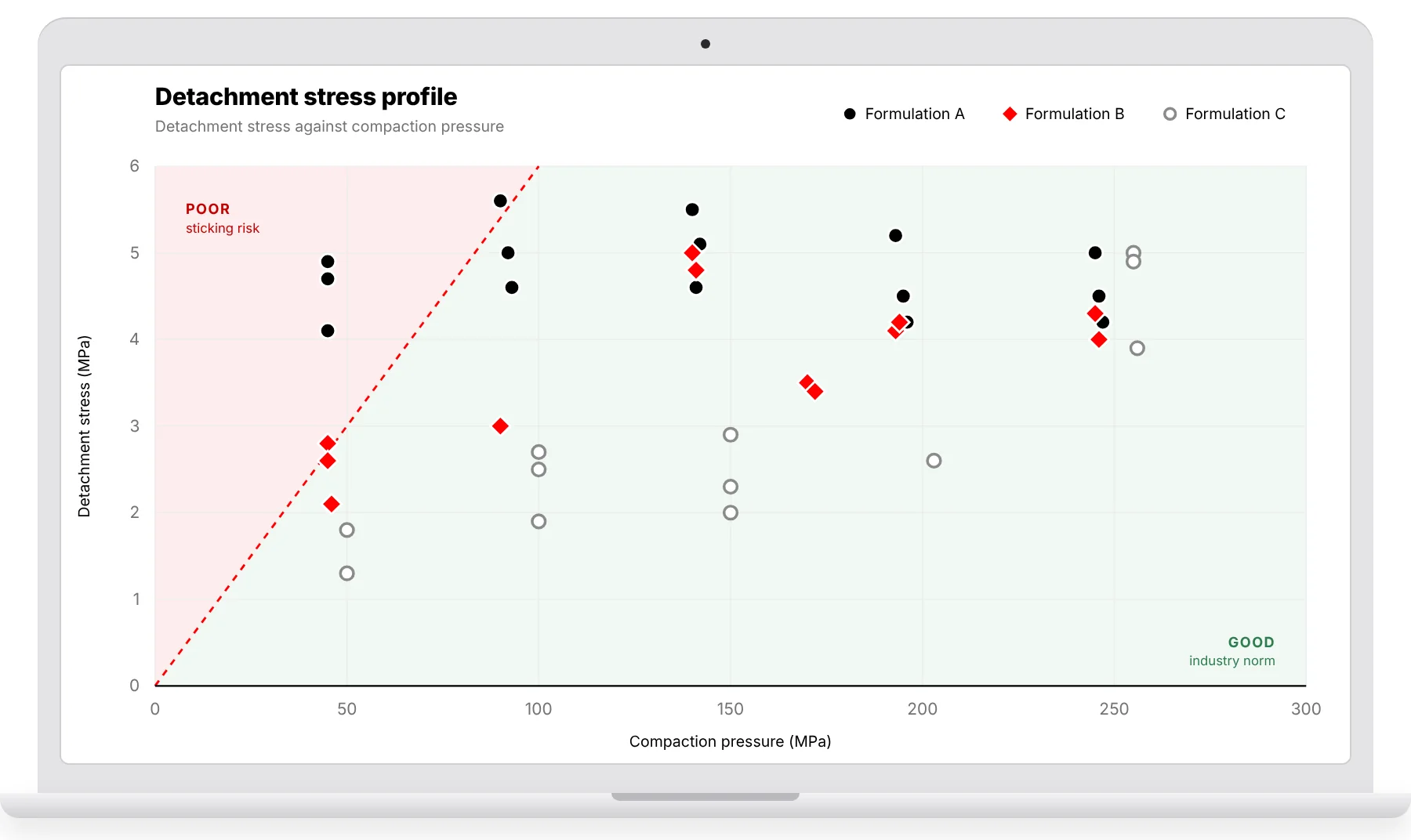
Detachment stress
Detachment stress is related to lubrication and take-off force. High values signal a risk of picking and sticking.
What a full compaction analysis is used for
The same data set answers different questions depending on where you are in development.
Use 01
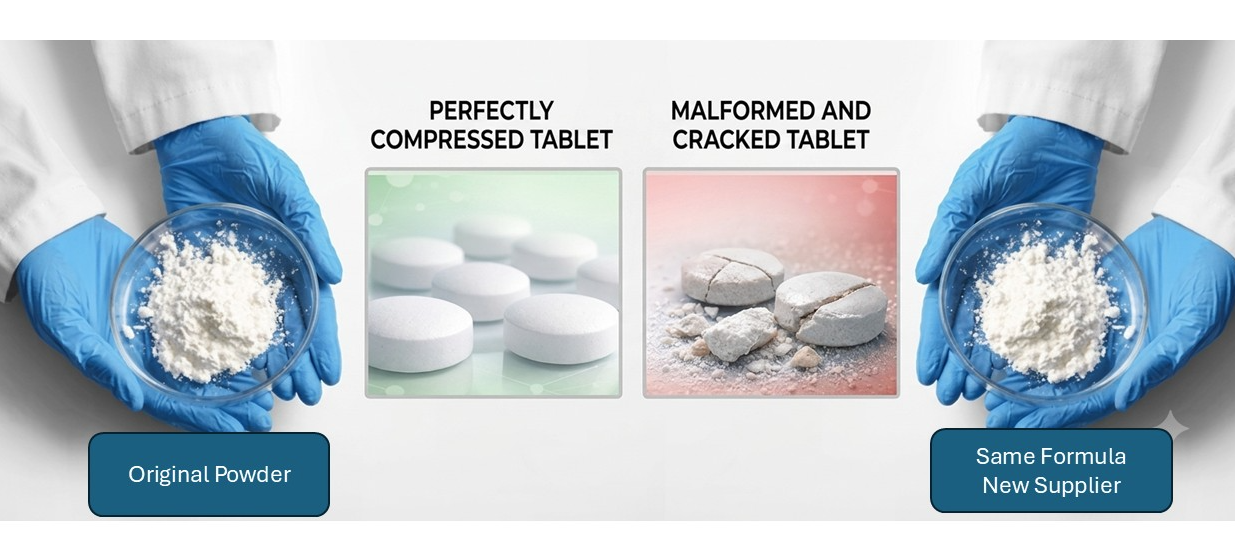
Ideal for new supplier evaluations
Many clients are interested in identifying alternative API or excipient suppliers. Drivers of change may include quality or performance improvements, better assurance of GMP and regulatory compliance, increased reliability of supply or simply to reduce costs.
Switching material source involves a considerable amount of effort and it is not always clear that the effort to qualify an additional source of supply will result in a satisfactory product.
Our testing service can definitively show that product made using a new API or excipient supplier is equivalent or not in terms of compaction. This reduces one of the major risk factors in changing a material supplier.
- Equivalent or not, in compaction terms
- Evidence before the qualification batch
- One of the major supplier-change risks removed
Use 02
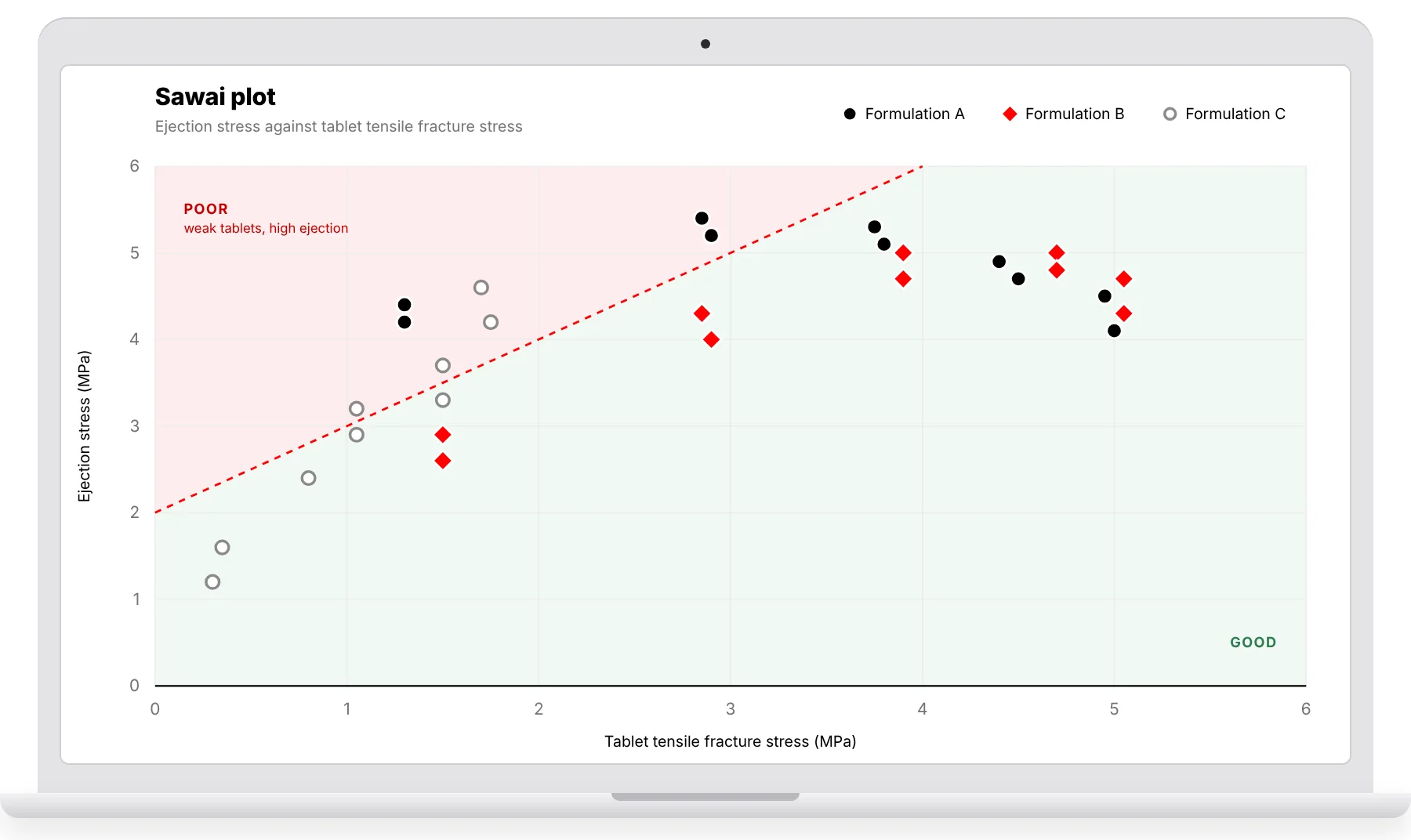
Formulation comparisons
A simple way to visualise and evaluate a formulation’s compaction behaviour against an ideal target when making formulation changes.
The G-ratio condenses compaction data so that materials and formulations can be compared quickly.
- Sawai plots
- G-ratio plots
- Ejection stress against tabletability
Use 03
Lubrication profiles
Poor lubrication leads to picking, sticking and capping. Three lubrication profiles show whether the lubricant level and blend are right before the formulation reaches a production press.
- Ejection Stress Profile
- Mean Tablet Detachment Profiles
- Ejection Stress vs Detachment Stress Profile
“Tablet failure on commercial rotary presses could be predicted accurately by the measurement of ejection shear stress data on the small scale.”
Pitt, K., et al., Powder Technology, 2015, 270: 490-493
Related services


Will your powder make a good tablet?
Send us a few grams and find out. A Gamlen scientist will come back to you within one working day with a test plan and a quote.